

The NBA handed out a lot of money this summer.
Even with the tax aprons and punitive repeater tax rules in place to limit team spending, a mind-boggling amount of money was given out this summer in contracts and extensions. Multiple players will cross the $500 million mark in total career earnings by the time their new deals are finished.
This summer also saw the impact of having bad money on the books. The Denver Nuggets lost Peyton Watson because they couldn't move the contract of Christian Braun. The Toronto Raptors couldn't find a team to take on Jakob Poeltl, preventing them from upgrading at the center position. Having long-term money on your books that overpays a player is a significant barrier to building a great team.
Which contracts signed this summer are immediately in that category? Which deals were "underwater" before the ink was even dry? Here are the 5 worst, with apologies to Bradley Beal, Dillon Brooks, Walker Kessler and Sandro Mamukelashvili -- you just missed the cut.
No. 5: Kevin Huerter, Detroit Pistons
After Kevin Huerter was unplayable in the postseason for the Detroit Pistons, a shooter who couldn't hit a shot, Huerter seemed destined for a minimum deal this summer. Instead, the Pistons made an immediate commitment to him, giving Huerter a three-year, $27 million contract. Like it or not, he is now an important part of their rotational plans and will need to rediscover his lost shot (30.8 percent from deep last season).
No. 4: Donovan Mitchell, Cleveland Cavaliers
Donovan Mitchell is a Top-15 player in the league, differentiating him from the other two "star" guards on this list. With that being said, he is not a Top 5 player, so it is going to be difficult to deliver on the massive maximum contract extension that he agreed to this summer.
Mitchell will make an average of $68.2 million a year on a new four-year deal that will not even begin until he is 31 years old. In 2030-31, Mitchell has a player option for $75.5 million when he will be 34 years old. In total, the new deal is $272.9 million in new money. Even if Mitchell maintains his current level of play, that will be a lot to spend on one player. If he declines as he exits his prime, the results on the Cavaliers' ability to be competitive will be dramatic.
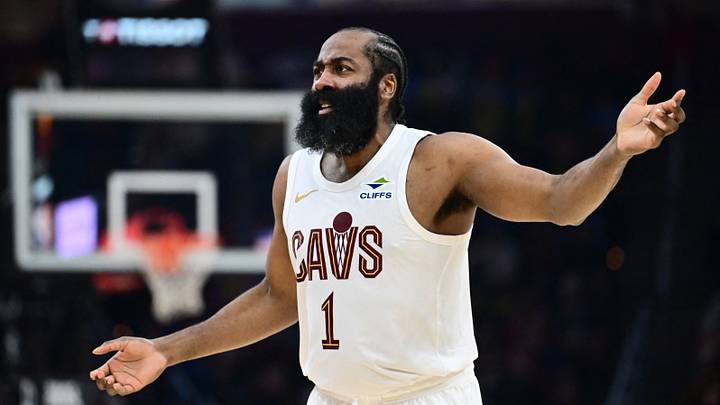
No. 3: James Harden, Cleveland Cavaliers
Not one, but two contracts for the Cavaliers make this list. They are spending a lot of money in the present to try and make a run at a title, and it will almost certainly come back to haunt them before all is said and done.
James Harden is a player with many gifts and massive flaws. In the regular season, he will help the Cavaliers bank wins, but in the postseason, he turns into a shell of himself. The Cavs are hoping to find the best of him after trading for him in February and now handing him a fully guaranteed, three-year, $97 million contract.
Harden will make $34.7 million in his age-39 season. Paying him in the present was reasonable if risky, but committing to a fully guaranteed third season is a decision unlikely to pay off. And if the drop-off happens as early as this season, it could doom Cleveland immediately.
No. 2: Gary Trent Jr., Milwaukee Bucks
Gary Trent Jr. was bad last season, he re-signed with a rebuilding team that should not be paying for veteran role players, and said rebuilding team is absolutely stuffed with shooting guards, including their rookie Top 10 pick.
And yet, Trent signed not a minimum contract, but a four-year, $64 million deal. The only possible explanation is that this contract was agreed to under-the-table years ago when he joined the Bucks on a minimum deal despite having more lucrative options available. That agreement came back to bite the Bucks when Trent's career took a nosedive.
As many have said, the best punishment for the Bucks is making them pay out this deal. This contract will be nearly untradeable for its duration.
No. 1: Trae Young, Washington Wizards
Coming in first on this list ahead of Trent is Washington Wizards point guard Trae Young. In another deal that was likely agreed to in principle ahead of time when the Wizards traded for Young during last season, this deal comes in at a whopping $212.8 million over four seasons.
Young is so undervalued by the rest of the NBA that the Wizards were able to trade for him without including a single draft pick or young player. That somehow did not clue them into the fact that Young is not an All-Star-level player and that his value around the league should be as a support player, not a franchise star.
Instead, the Wizards handed him a massive deal in terms of years and dollars. While Donovan Mitchell will make more, he will deserve it for part of the contract. Young starts out underwater and will end up in the Mariana Trench. He has a fully guaranteed $58.4 million player option in 2029-30, four years from now. Add in a trade bonus as well, why not?
Handing this contract to Young was inexplicable and will absolutely come back to haunt them. That makes this deal the worst contract agreed to this summer.
 Add us as a preferred source on Google