

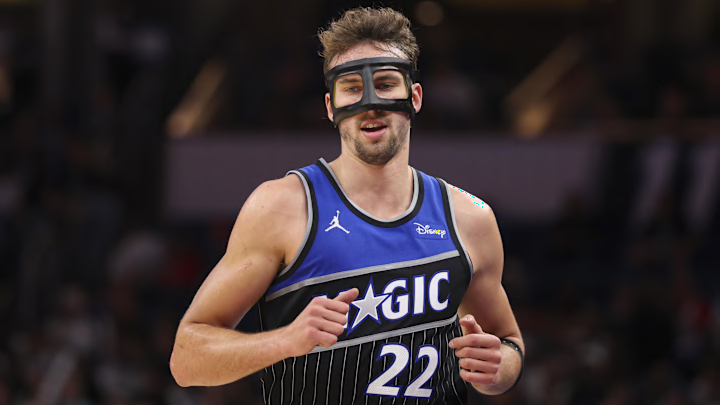
The Detroit Pistons had everything lined up. The No. 1 seed, home court advantage, and a season that suggested their rise had arrived ahead of schedule, all pointing toward a postseason run that could define the next phase of the franchise.
Cade Cunningham’s return from a lung collapse only reinforced that narrative, adding a layer of resilience and emotional momentum that felt difficult to disrupt. It was supposed to be a beginning, a confirmation that Detroit had taken the final step toward real contention.
But Game 1 changed the tone, not dramatically on the surface, but enough to shift the balance of the entire series.
The Orlando Magic seized early control of the series
Orlando approached the game with a level of control that immediately disrupted Detroit’s rhythm, slowing the pace and forcing possessions into half-court situations where execution mattered more than energy.
They did not rely on short bursts or unsustainable shooting stretches but on structure, spacing, and disciplined decision-making that held up from the opening minutes to the final stretch.
By taking the first game in that manner, Orlando did more than gain a lead. They positioned themselves to dictate how the rest of the series unfolds, forcing Detroit into a reactive role much earlier than expected.
The German core is quietly shaping the matchup
At the center of Orlando’s approach is a level of cohesion that cannot be easily replicated within a single season. Franz Wagner once again looked like the primary connector, finishing with 19 points.
Tristan Da Silva added a steady 7 points, but his impact extended beyond scoring, as he consistently made the right reads and maintained spacing in moments where possessions could have easily broken down.
That shared international experience, built through championship runs with Germany (they are the defending World and Euro Cup champions), becomes visible in these moments, where timing, trust, and composure take precedence over individual flashes.
Paolo Banchero amplifies everything around him
While the German duo provided structure, Paolo Banchero ensured that structure translated into production. He led the team with 23 points, adding nine rebounds and four assists, and consistently forced Detroit to adjust its defensive coverage in ways that opened opportunities across the floor.
His presence changes how defenses behave, drawing attention before the play fully develops and creating space that others can exploit.
That combination proved difficult for Detroit to contain in Game 1, and it remains a central challenge as the series continues.
Moritz Wagner could become the German joker
What makes Orlando’s position even more intriguing is the flexibility it has not yet used. Moritz Wagner has not played in the series so far, yet his profile as a physical, high-energy big man offers a completely different dimension that can be introduced if needed.
His ability to stretch the floor, bring intensity, and disrupt opposing frontcourts provides Orlando with an additional adjustment that Detroit must already consider, even before it appears on the court.
If he is integrated at the right moment, he could function as a true “German joker,” reinforcing the existing structure while adding a layer of unpredictability that makes preparation more difficult for the Pistons.
The Detroit Pistons now face a shift in pressure and control
For the Pistons, the series is far from lost, but the context has changed in a meaningful way since they lost home court advantage.
Instead of building on momentum, they now have to respond to a team that has already demonstrated it can dictate pace and maintain composure under pressure.
The foundation remains strong, and Cunningham’s presence continues to anchor their long-term outlook, but Game 1 exposed how quickly control can shift when execution falters. The challenge now is not just to win, but to reclaim the terms under which the game is played.
 Add us as a preferred source on Google