

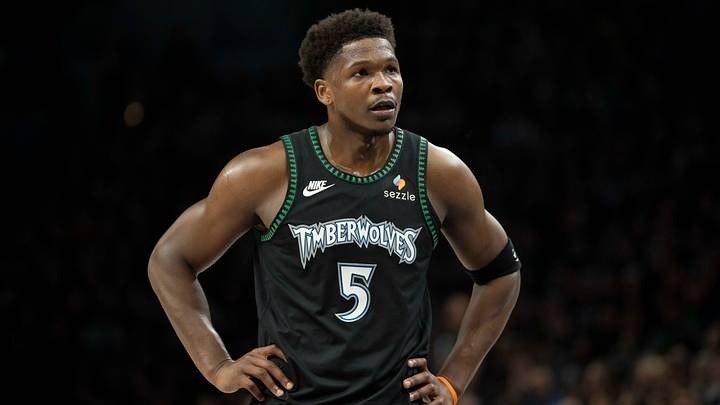
The Minnesota Timberwolves have dramatically reshaped their roster this offseason, despite having massive financial limitations. However, did they actually get better?
The Timberwolves made back-to-back Western Conference Finals before bowing out in the second round of last year's NBA playoffs. That resulted in a dramatic roster overhaul that saw them trade Julius Randle and Naz Reid, bring in star LaMelo Ball, and add Jonathan Kuminga.
I'll give them this: they get an A for effort. Even so, it's hard to say that they've gotten better. Their recent success has relied heavily on star Anthony Edwards and a three-headed big man rotation that consisted of Rudy Gobert, Reid, and Karl-Anthony Towns/Randall.
Now, they have Edwards, Ball, and Gobert as their new Big Three. That would seemingly be an upgrade but perhaps not.
The Minnesota Timberwolves sacrificed their identity to get better
The Wolves had a big man rotation seemingly tailor-built to counter the Denver Nuggets and it worked with a charm. They eliminated them in back-to-back postseasons, forcing the then-defending champions back to the drawing board.
Now, they are more guard-heavy and don't have the same identity. Ball is a massive upgrade over Mike Conley, though he is injury-prone. There is also a concern that he could take the ball out of Edward's hands, potentially making the Wolves easier to stop offensively.
That's a valid concern, as are the Wolves potentially being worse defensively next season. Gobert is entering his age 35 season and will have to continue to anchor the Wolves' defense.
The Wolves are different but not necessarily better
Even despite a strong defensive season from him last year, the Wolves had some signs of slippage. Those are some potential weaknesses that could become larger issues in the playoffs.
Remember, they lost to the San Antonio Spurs in the NBA playoffs. The Spurs seem well equipped to slow down Ball and limit Edwards, while Gobert struggles to defend Victor Wembanyama.
The same could be said for the Oklahoma City Thunder, who are more than equipped to stop the Timberwolves. If that's the case, then Minnesota ranks as more of a fringe Western Conference Finals team than a favorite
 Add us as a preferred source on Google