

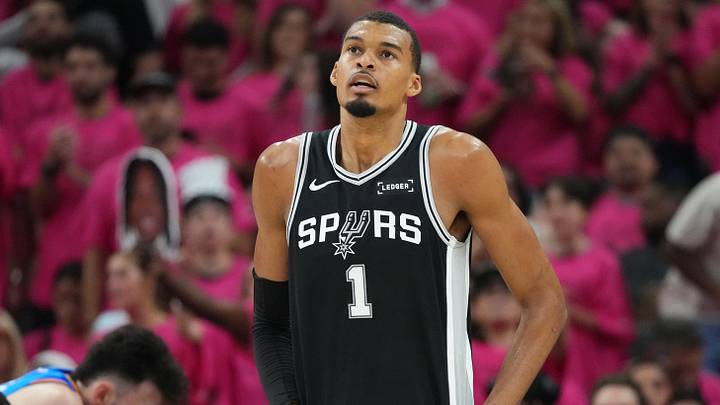
The Oklahoma City Thunder looked overmatched against the San Antonio Spurs during the regular season.
They lost the season series 1-4, struggling to consistently solve Victor Wembanyama and the unique problems the Spurs created around him. That record shaped expectations entering the Western Conference Finals, with many believing San Antonio had already discovered the blueprint to control the matchup.
Three playoff games later, the script has flipped. Oklahoma City now leads 2-1, and the difference has not just been execution. It has been psychology and the Thunder are handling this situation now very differently.
The Thunder changed their entire approach
During the regular season, most teams treated Wembanyama carefully. Opponents avoided challenging him directly at the rim, often settling for jump shots or redirecting possessions entirely to stay away from his defensive reach.
That caution helped reinforce his dominance and allowed him to dictate games from the paint outward. Oklahoma City has done the same, but they do it now very differently during this playoff series.
Instead of avoiding him, they have attacked him directly, repeatedly forcing contact and challenging him in areas where most teams hesitate. The strategy looks risky on paper, but through three games, it has disrupted San Antonio’s defensive comfort and forced Wembanyama into situations he normally controls rather than reacts to. That shift has changed the emotional tone of the series.
The MVP disappointment may have opened a door
The emotional backdrop matters here. Wembanyama narrowly missing out on MVP against SGA clearly stirred emotions, and Game 1 looked like the response of a player channeling that frustration productively and continously.
He dominated the game and helped push the Spurs to an early statement win that seemed to confirm his emotional edge had become fuel. But Games 2 and 3 felt different from the game 1 statement win.
Oklahoma City appeared to recognize that the emotional side of the situation could work both ways. Rather than shrinking from Wembanyama’s presence, the Thunder increasingly challenged him physically and emotionally, testing not just his defense but his patience and composure. And the reactions became noticeable.
The frustration around Wembanyama is becoming visible
This is where the series has turned. Even smaller Thunder players stopped showing hesitation. Jared McCain, hardly the player most fans would expect to challenge Wembanyama directly, attacked the rim aggressively and even flexed after converting a stunning layup over him, a moment that captured how comfortable Oklahoma City has become with its approach.
That confidence matters. Because once opponents stop fearing the rim protector psychologically, the entire defensive equation changes. Suddenly possessions feel freer, drives become more aggressive, and the emotional pressure shifts back toward the defender.
Wembanyama himself appeared visibly frustrated after Game 3, acknowledging afterward that he struggled to elevate his teammates and could not consistently make them better in the current circumstances. That is not a normal postgame tone from him.
Going under Wembanyama’s skin has worked so far for OKC
The Thunder deserve credit for recognizing something others often avoid. This is not just a tactical series anymore. It has become emotional.
By attacking Wembanyama directly, forcing difficult reactions, and refusing to play cautiously around him, Oklahoma City has disrupted the dynamic that helped San Antonio dominate the regular season matchup. Whether intentional or not, the strategy has gone beyond basketball and into confidence, pride, and emotional control.
So far, it is working. But that may also make the next games dangerous for OKC, because frustrated superstars do not always stay frustrated for long. Sometimes they respond. And when the player involved is Victor Wembanyama, that possibility always hangs over the series.
 Add us as a preferred source on Google