

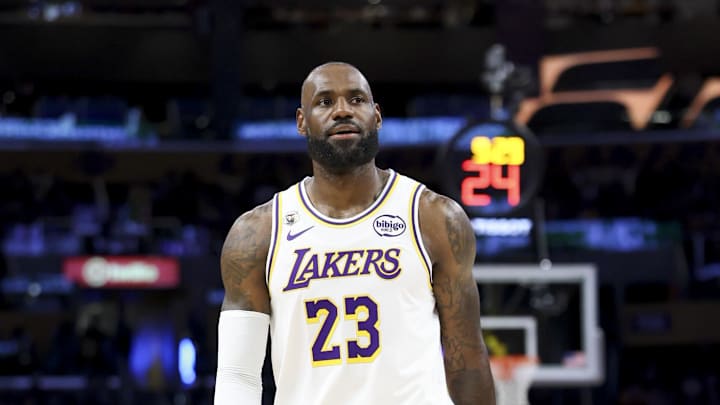
The Los Angeles Lakers were 17-6 entering Dec. 9. They weren’t dominant, but they were composed. And then something quietly shifted.
Since Dec. 9, the launch of Rich Paul’s Game Over podcast, the Lakers are 18-18. The contrast is too sharp to dismiss.
This is not about superstition. It is about environmental and structural changes. Let us dive into what really happened behind the scenes.
Rich Paul shifted the conversation around the Los Angeles Lakers
Rich Paul is not just LeBron James’ agent. He represents influence inside the Lakers’ and NBA ecosystems. Other big players like Anthony Davis belong to his Klutch Sports Group. He is not just another agent.
Once the podcast launched, Paul began speaking more openly about narratives, power perception, and how organizations frame control. That matters because the Lakers are uniquely sensitive to hierarchy.
In Los Angeles, ownership, superstar, and representation must operate in visible alignment. When even subtle tension becomes public discourse, it reframes the franchise as divided rather than unified.
Players hear it. Opponents sense it. Media amplifies it. Contenders protect internal politics. The Lakers suddenly made theirs conversational.
The Jeanie Buss report exposed friction inside the Lakers
At the end of January, Paul addressed an ESPN report claiming Jeanie Buss had grown frustrated with LeBron James and the influence of Klutch Sports Group.
His reaction was dismissive: “There’s an article written every day,” Paul said. “Who gives a s—t? I don’t.”
He added that people need to be “unbothered” and concluded, “You won. So there’s nothing to talk about there.” But here’s the strategic issue: he did not shut it down.
He did not say the report was false. He did not strongly reaffirm harmony between LeBron and ownership. In high-level organizations, ambiguity creates space for doubt. And doubt affects cohesion.
LeBron James is leveraging the Lakers' instability
There is one question that remains. Why should Paul sell out his boy? One explanation is leverage, but in a very concrete sense. If the Lakers believe LeBron James ultimately wants to remain in Los Angeles to play alongside his son, they might view that emotional priority as negotiating leverage.
A franchise could quietly assume that legacy and family considerations lower external pressure, potentially paving the way for a team-friendly deal or even something akin to a veteran-minimum structure late in his career.
Rich Paul would never allow that perception to solidify. If LeBron’s market value appears to decline publicly, it affects LeBron as well. It affects Klutch Sports Group. Klutch's brand power directly depends on the ongoing leverage of its flagship client.
If LeBron looks washed, the ripple effects extend beyond one contract
Among close friends, hard stances are possible and sometimes necessary. LeBron has said before that while Paul is his agent, he has his own independent voice. That suggests trust, but not blind alignment. An agent’s role is not sentimentality. It is protection.
If Paul senses even subtle manipulation, even the suggestion that the Lakers believe they hold the upper hand, reinforcing LeBron’s influence publicly becomes a defensive strategy.
It may not be sabotage by design. But in practice, it increases friction around a franchise that was far steadier at 17-6 than it has been at 18-18.
 Add us as a preferred source on Google