

Kendrick Perkins has never been subtle, and that is exactly why his takes often irritate fans. He is blunt, occasionally unfair, and sometimes overly dramatic. But he is also a realist, and when he says the Los Angeles Lakers look more like a collection of individuals than a real team, there is smoke worth paying attention to.
Perkins’ “mercenaries” comment was harsh. Yet the more the Lakers are watched closely, the clearer it becomes that what they have is not a unified group culture, but a series of isolated dynamics that do not fully connect.
Good chemistry exists but not a shared culture
There are real positives inside the locker room. Luka Dončić and Jaxson Hayes clearly harmonize on and off the court. Austin Reaves is universally liked and trusted. Smaller groups work well together.
The problem is scale. These are pockets of chemistry, not a collective identity. Players seem comfortable within their own lanes, but there is little evidence of a shared emotional or competitive center that pulls everyone in the same direction.
That distinction matters in the playoffs. Championship teams are not just friendly or functional. They are aligned. The Lakers often look adjacent rather than united.
When leaders are not aligned, the rest cannot follow
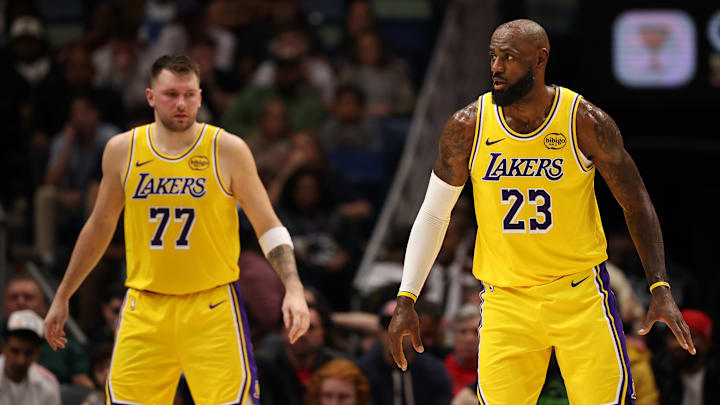
The Luka–LeBron relationship is respectful, but it is not intimate. LeBron James and Dončić represent different generations, different journeys, and different timelines. Mutual respect exists, but that does not automatically translate into shared leadership.
Moments like Dončić being invited to Las Vegas with the Backstreet Boys while LeBron was nowhere near the picture may seem trivial, but they reveal distance. You do not need to overanalyze it to see that these two stars are not fully on the same page culturally.
When leaders are parallel rather than synchronized, the rest of the roster feels it. Players take cues not from speeches, but from alignment at the top. Right now, that alignment is loose.
Why Redick cannot force what is not there
JJ Redick deserves credit for trying to impose structure. He wants collective basketball, accountability, and shared responsibility. But chemistry cannot be commanded.
At times, Redick comes across as authoritarian, publicly lashing out when players drift into individual play. That approach can work for established coaches with deep credibility. For a rookie head coach, it risks resistance rather than buy in.
Respect in the NBA is earned slowly, especially when star power outweighs experience. Redick may eventually get there, but right now he cannot manufacture cohesion simply by demanding it.
And that is why Perkins’ take resonates. You can build chemistry, but you cannot force belief. If the leaders are not fully aligned, and the coach is not yet fully empowered, the structure collapses under pressure.
This is why the Lakers feel unstable. Not talent wise, but culturally. With the trade deadline approaching, this roster does not feel like one that will organically fix itself. More likely, it breaks apart before it ever truly comes together.
 Add us as a preferred source on Google