

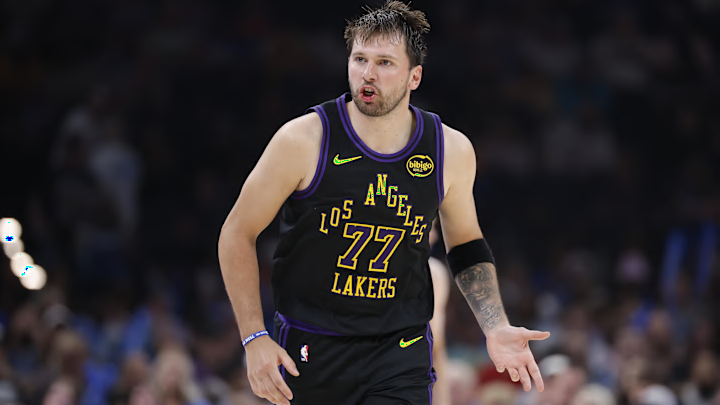
The Los Angeles Lakers are one win away from closing the series, and under normal circumstances, that would be the only objective that matters. Finish the job, avoid unnecessary risk, and move on as quickly as possible, especially after building a 3-0 lead without Luka Dončić and Austin Reaves.
However, this situation is not normal, and the context surrounding it is beginning to shape decisions in a way that goes beyond a single game. Because what happened in Game 4 raised more questions than it answered.
Oklahoma City Thunder will be the Lakers' second-round opponent
If the Lakers close out the series, they are heading straight into a matchup with the Oklahoma City Thunder (they just won the series against the Suns), a team that has looked dominant throughout the season and one that presents a completely different level of challenge.
Without Dončić and Reaves fully healthy, that series borders on unwinnable. Their projected return timeline aligns with the end of a long first round or the beginning of the second, which means timing suddenly becomes critical.
The official second-round start date is May 4, but it could move up to May 2 or 3 depending on how quickly the first-round series ends, and those extra days could determine whether the Lakers enter that matchup whole or still incomplete. In that light, one game starts to carry far more weight than usual.
Game 4 of Lakers and Rockets didn’t look like a normal loss
After going up 3-0, head coach JJ Redick made a decision that stood out immediately. He gave extended minutes to some of the most unlikely players in the rotation, shifting away from the tighter structure that had defined the first three wins.
The result was not a close loss or a game that slipped away late +
but a 20-point defeat that felt unusually one-sided for a team that had controlled the series so convincingly. That is what makes it difficult to ignore.
Teams rarely lose like that in Game 4 after taking a 3-0 lead, especially not without a clear competitive push. Dropping to 3-1 in that manner does not just happen by accident. It raises the question of whether priorities in that game were different from the previous three.
A dangerous gamble in the NBA playoffs for more time
The idea is uncomfortable, but it exists. Extending the series, even by one or two games, could buy the Lakers the exact time they need to get Dončić and Reaves back at a meaningful level.
Did they lose on purpose? The Lakeshow Podcast discussed this possible conspiracy theory. But if you look closer at it, the loss makes sense. A longer first round could significantly improve their chances against Oklahoma City. At the same time, the risk is obvious.
Once a series extends, control is no longer guaranteed. Momentum can shift, opponents adjust, and what looked like a secure 3-0 lead can quickly become unstable. The Lakers would not just be trading time for recovery; they would be opening the door to a series that no longer follows the expected script.
The Lakers have already seen how much one game can matter. Winning their final regular-season game secured the No. 3 seed, gave them home-court advantage, and played a direct role in how they were able to take control of this series early.
Now they are facing another moment where a single game could shape everything that follows.
If they believe their only realistic chance against Oklahoma City depends on being fully healthy, then the temptation to buy time will be strong, even if it carries significant risk.
 Add us as a preferred source on Google