

The Los Angeles Clippers were built to win now. That part was intentional, even admirable. But in chasing contention, they surrendered too much long-term control — and now they are living inside the NBA’s growing structural imbalance.
This isn’t about one bad trade. It’s about a system where good teams mortgage their future to stay relevant, while one elite franchise sits on both present dominance and future leverage.
The Oklahoma City Thunder turned picks into monopoly power
The Oklahoma City Thunder are not just another rebuilding team sitting on draft picks. They are the rare organization that converted draft capital into real, sustainable dominance. They drafted well, developed patiently, and maintained flexibility while other teams rushed timelines.
Now they control stars, depth, and surplus first-round picks. That is not normal competitive balance—that is strategic monopoly power.
Most lower-tier teams accumulate picks and remain stuck in mediocrity. The Thunder escaped that cycle. And because they escaped it, the league now feels even more imbalanced. They can improve without sacrificing their core, while others must sacrifice something significant just to tread water.
The Los Angeles Clippers are competitive but structurally exposed
After making one of the worst deals with the Thunder - gutting their own flexibility while helping build a juggernaut in OKC, the Clippers finally recognized the danger. Seeing the long-term writing on the wall, they began shifting course by moving major contributors like Ivica Zubac and James Harden to recover value and improve their future outlook. But too little too late.
When you’ve already surrendered premium draft capital in prior deals, incremental asset recovery doesn’t restore leverage. It only reduces the damage. Los Angeles is still built to compete - but it lacks the insulation required to survive decline.
They are now stuck initiating a rebuild while hosting the All-Star Game at the Intuit Dome - all without being a legitimate contender this season. That’s a staggering display of mismanagement.
The 76ers trade shows how imbalance gets exploited
Look at the Philadelphia 76ers. On paper, they are loaded with star talent. In practice, they are cap-heavy, reliant on injury-prone veterans, and limited in flexibility.
When the Thunder acquired Jared McCain for four draft picks, it was framed as a balanced deal. Philadelphia gained draft assets. Oklahoma City gained upside.
But context matters. Those picks are unlikely to dramatically change the Sixers’ trajectory. With limited cap room and max contracts tied to aging players, those assets will likely be used in short-term patchwork moves rather than foundational restructuring.
Meanwhile, the Thunder potentially secured a high-upside player from a team that could not structurally develop him. Sixers fans were furious, accusing management of greed. From Oklahoma City’s perspective, it was simply asset optimization.
The NBA’s middle class is disappearing
This is the bigger issue the Clippers now embody. Contenders are pressured to sacrifice draft capital to chase championships. If they win, it’s justified. If they don’t, they become fragile.
Rebuilding teams stockpile picks but rarely convert them into sustained dominance. And then there is Oklahoma City—elite in the present, flexible in the future, and capable of exploiting both desperate contenders and rigid, star-heavy teams.
Pointing to the Thunder as proof that the system works ignores the reality that they are the exception, not the rule. One franchise escaping the rebuild trap doesn’t mean the structure itself is balanced.
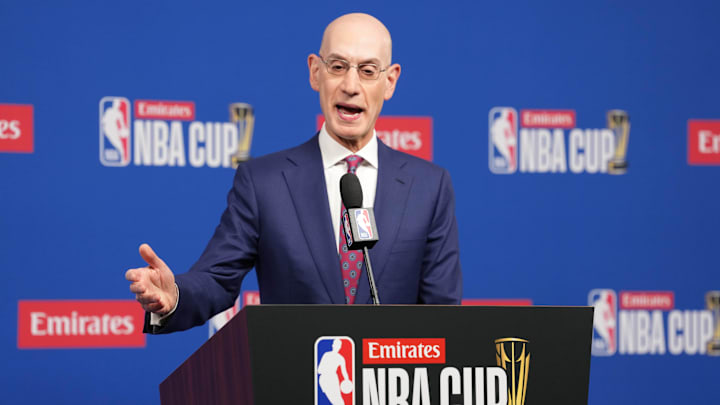
And the league office? Adam Silver is watching this imbalance unfold in real time. Instead of addressing the structural asymmetry, the NBA is exploring expansion—potentially into Europe—to inject another wealthy, investor-backed franchise into the ecosystem.
 Add us as a preferred source on Google