

The NBA playoffs have delivered drama, intensity, and unforgettable moments. They have also delivered something else: growing frustration about officiating.
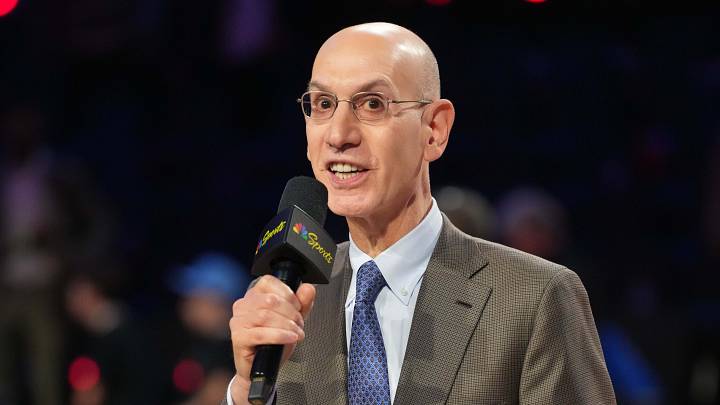
That is why Adam Silver’s recent comments landed so heavily across the basketball world. While fans, analysts, and even players continued debating controversial whistles and inconsistent standards throughout the postseason, the NBA commissioner described the officiating as “incredible.”
For many watching these playoffs, that response felt disconnected from reality. And instead of calming tensions, it may have made them worse.
The NBA playoffs have been full of officiating controversy
This debate did not emerge out of nowhere. Throughout the postseason, officiating repeatedly became part of the story rather than remaining in the background, where most fans prefer it. Physicality, flopping concerns, inconsistent foul standards, and emotional confrontations increasingly shaped headlines alongside the basketball itself.
The Thunder-Spurs series became one of the clearest examples. Oklahoma City deserves credit for its aggressive and fearless approach. However, many Spurs supporters and neutral observers questioned whether the physicality crossed the line too often without consequence.
Isiah Hartenstein, in particular, faced criticism after several highly physical sequences that many believed should have drawn whistles but did not.
That perception matters. Because once fans begin expecting inconsistency rather than simply reacting to isolated mistakes, confidence in officiating becomes difficult to rebuild.
Tyrese Haliburton tried to add perspective
Not everyone fully agreed with the outrage. Tyrese Haliburton argued that officiating outside the United States can be significantly worse and less consistent than what NBA players experience domestically. From that perspective, criticism of NBA referees sometimes lacks broader context and overlooks how difficult modern officiating has become.
That is a fair point. Basketball is faster than ever, spacing creates constant contact situations, and referees operate under enormous pressure with millions dissecting every decision afterward. Mistakes are inevitable, and comparisons with international officiating remind fans that perfection simply does not exist.
But Haliburton’s argument does not entirely explain Silver’s approach. If anything, it highlights the complexity of the issue rather than dismissing criticism altogether. That is why describing the officiating as outright “incredible” struck many observers as tone-deaf rather than reassuring. The timing felt wrong.
Adam Silver’s solution may be more important than his words
To Silver’s credit, he did not stop with praise. The commissioner also pointed toward technological change, explaining that AI-assisted systems will increasingly take over objective rulings such as out-of-bounds calls. The idea is simple: automate clear, measurable decisions and reduce the burden on referees so they can focus more fully on the subjective calls that require human judgment.
That is a serious proposal. And frankly, it may be the most constructive part of the entire conversation. Removing objective uncertainty could reduce stoppages, improve consistency, and protect officials from some of the scrutiny surrounding obvious replay situations.
The challenge is that most current frustration does not revolve around objective calls. It revolves around interpretation.
The NBA still faces a credibility problem
This is why Silver’s comments created such a strong reaction. Fans are not primarily angry about out-of-bounds rulings.
They are debating foul standards, flopping, physicality, and whether playoff basketball is being officiated consistently across teams and situations. Those are deeply subjective areas where technology cannot fully solve the problem.
At least not yet. That is why many hoped for a more measured tone from the commissioner, one acknowledging both the difficulty of officiating and the frustration surrounding recent playoff games. Instead, calling the officiating “incredible” sounded to some less like leadership and more like institutional self-defense.
 Add us as a preferred source on Google