

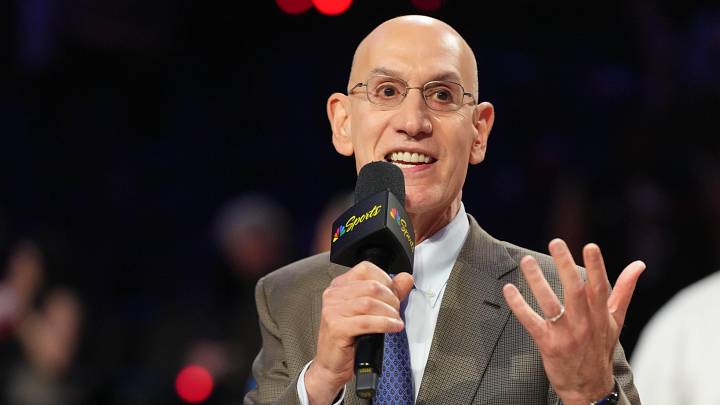
The NBA has officially approved controversial new anti-tanking lottery reforms, known as the 3-2-1 system, marking Adam Silver’s strongest push yet against deliberate losing. The concept is straightforward.
Under the new setup, the three worst teams receive two lottery balls each, while teams ranked fourth through 10th from the bottom receive three, slightly rewarding competitive lottery teams over outright bottoming out.
The system also expands lottery participation, with No. 9 and 10 seeds getting two balls and play-in losers one each, while preventing teams from repeatedly landing top picks in consecutive years. That is a meaningful shift.
Because tanking never disappeared, it simply evolved. Rested veterans, questionable injury management, and developmental lineups increasingly turned late-season basketball into a positioning battle. Now the NBA is trying to change the incentives behind it.
The lottery debate reached uncomfortable territory
The controversy was building for some time. The NBA has long tried to walk a delicate line between allowing legitimate rebuilding and discouraging teams from openly pursuing losses. Previous lottery reforms flattened the odds, yet many executives still believed the system remained exploitable if handled carefully enough.
Recent examples only strengthened that perception. The Utah Jazz became a symbol of the debate this season. Critics accused the franchise of leaning heavily into lottery positioning, only for Utah to walk away with the No. 2 overall pick and a realistic pathway toward landing a franchise cornerstone.
Whether intentional or not, the optics were difficult for the league to ignore. That outcome sent a message. And perhaps not the one Silver wanted, and finally he had to act upon it.
The NBA wants losing to feel less rewarding
This is why the new rules matter. The league is not trying to eliminate rebuilding. That would be impossible and, frankly, unfair to struggling franchises that genuinely need access to elite young talent. Smaller-market teams often survive through the draft, and removing that pathway entirely would only deepen inequality across the league.
But there is a difference between rebuilding and openly accepting defeat. The NBA increasingly appears uncomfortable with seasons that become transparent lottery races by February or March. Empty arenas, disengaged fan bases, and games stripped of urgency create a product problem as much as a competitive one.
Silver understands that perception matters, especially in a league built on stars, drama, and meaningful competition. The newest reforms reflect exactly that concern.
Front offices will adapt quickly
Of course, NBA executives are rarely easy to outmaneuver. That is the irony surrounding anti-tanking reforms. Every time the league closes one loophole, front offices usually find another. Tanking may not disappear at all. It may simply become quieter, more sophisticated, and harder to identify publicly.
That is why these changes feel less like a final solution and more like another chapter in a longer struggle between league office priorities and organizational incentives. And the struggle is real.
Because from a purely strategic perspective, drafting an elite prospect can change a franchise faster than years of mediocre competitiveness ever will. Teams know this. Owners know this. Fans often know this too, even while criticizing the process publicly.
Adam Silver just raised the pressure on rebuilding teams
The immediate impact of the reforms remains uncertain, but the signal itself feels unmistakable. Silver and the NBA no longer seem satisfied with simply criticizing tanking rhetorically while accepting its consequences in practice.
The new rules suggest growing impatience with teams that appear too comfortable prioritizing draft odds over basketball itself. Whether the strategy works is another question entirely.
But after years of controversy and growing backlash, rebuilding teams around the league just received a clear warning: the NBA may still tolerate rebuilding, but it no longer wants losing to look quite so profitable.
 Add us as a preferred source on Google